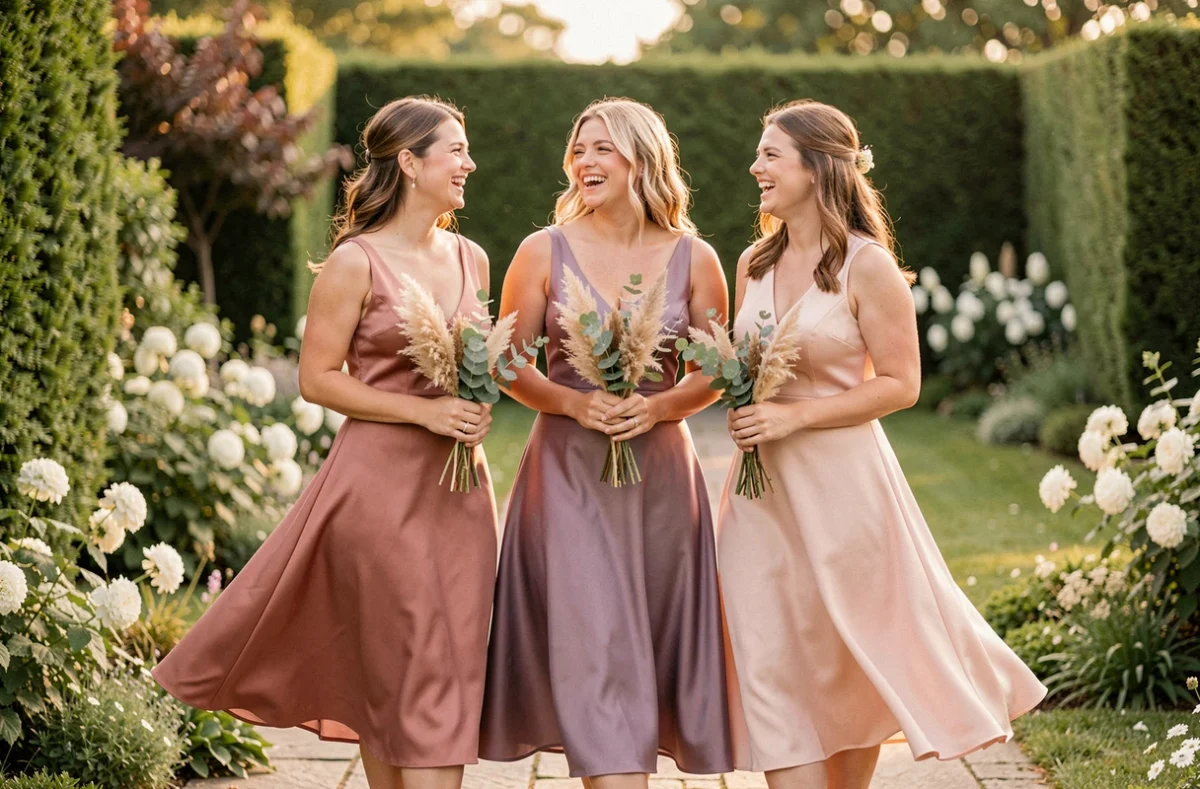
Choosing the color of bridesmaid dresses involves much more than personal taste. The shade needs to look good in photos, suit a range of body types and skin tones, and ideally allow each bridesmaid to wear her dress again after the wedding.
Several practical factors, often underestimated, determine whether the color palette works: the lighting at the venue, the photographer’s editing style, size availability in the chosen color, and tailoring turnaround times.
How colors photograph: what changes between the fitting and the photos
A pastel fabric tried on in a boutique under white lighting can lose all its impact in photos taken in soft natural light or edited in a “light and airy” style. Conversely, dark shades such as burgundy or forest green often look richer under warm indoor lighting, to the point of appearing almost black in some photos.
The photographer’s editing style can make these differences even more pronounced. Desaturated editing tones down pastels, while higher-contrast editing makes bright colors stand out. Checking fabric swatches under different lighting conditions before settling on a shared shade helps avoid unpleasant surprises.
A practical test is to photograph the swatches with flash, in natural outdoor light, and under the venue’s lighting. Comparing these three images gives you a realistic idea of the final result. Asking the photographer for examples of wedding parties in similar shades can also help you anticipate how the colors will look. It’s worth factoring this into the process of choosing bridesmaid dress colors from the outset.
A cohesive palette and a dress you can wear again: balancing two priorities
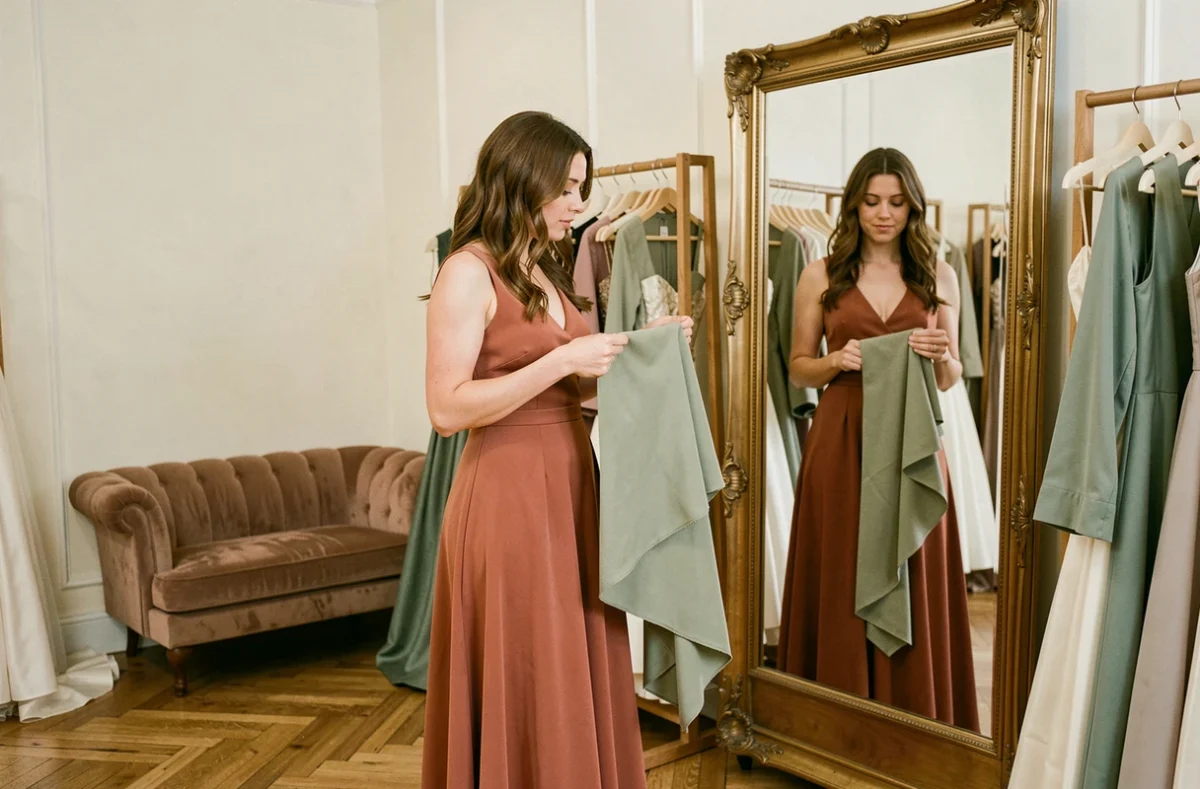
The mix-and-match trend, which pairs different dress styles within the same palette, serves two purposes. It lets each bridesmaid choose a dress that suits her body type while maintaining a cohesive look in group photos.
This approach raises a practical question: can a bridesmaid dress really be worn again after the wedding? Some colors make it easier to get a second wear, while others are less versatile. Sage green, navy, and burgundy fit easily into an everyday or evening wardrobe. Candy pink or highly saturated coral offer fewer options.
Practical criteria for a versatile palette
- Choose shades that work outside a wedding setting: navy, sage, champagne, burgundy, and terracotta. These colors are just as suitable for dinner as they are for a wedding.
- Set a saturation range rather than choosing a single color: asking for mid-tone shades (neither too pastel nor too bright) lets each bridesmaid choose a shade within a defined spectrum.
- Check that the chosen color is available in all the sizes you need. Customer reviews note that the color received may differ from online images, which is all the more reason to order fabric swatches before making any decisions.
- Allow time for tailoring, especially for hems and bodice adjustments, which can add several weeks to the schedule.
Bridesmaid dress colors by season and venue
Competitors’ guides tend to offer fairly generic seasonal lists. The venue and its lighting—not just the month of the year—should be the main factors in your decision.
An outdoor wedding in direct sunlight calls for light or mid-tone shades, which absorb less heat and look fresh in photos. Pastels hold up better in full sun than dark shades, which can look overpowering in harsh light.
For an indoor reception with subdued lighting, deep shades such as forest green, burgundy, and navy really come into their own. In this setting, pastels may look washed out.
Venue and color combinations that photograph well
- Stone-vaulted hall: burgundy, golden champagne, olive green. Light-colored stone brings out warm tones.
- Garden or vineyard: sage green, terracotta, misty blue. The foliage creates a natural backdrop that complements these shades.
- Seaside venue or bright space: dusty blue, lavender, blush pink. Abundant light keeps pastels looking clear and vibrant.
- Urban loft or industrial space: black, navy, emerald. The venue’s raw textures call for bold colors.
Sizes, lead times, and color variations: the logistical pitfalls of matching dresses
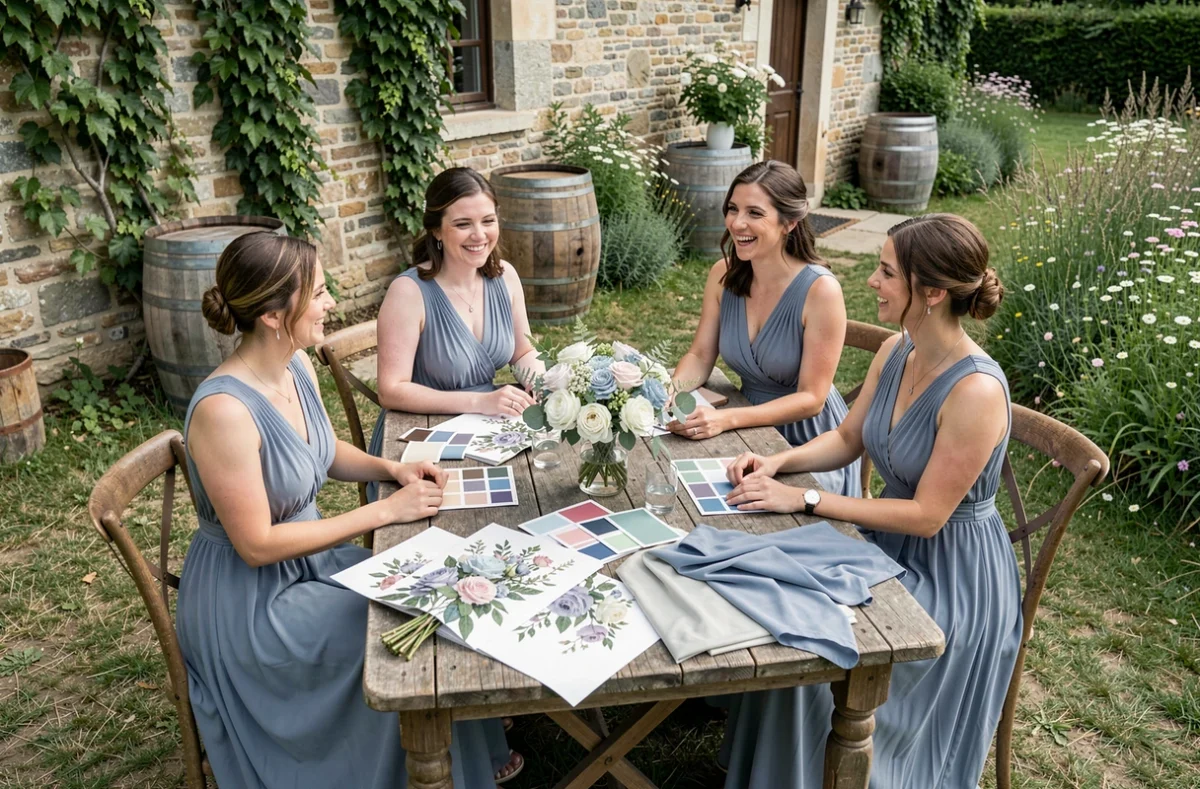
Choosing a palette is one thing. Making sure every dress arrives in the right shade and size, and on time, is another. Reviews of formal dresses show that the color delivered can differ noticeably from the one shown on the website. The same color reference can sometimes vary visibly from one production batch to another.
For a wedding party of four to six bridesmaids, this variation poses a real risk. Two precautions can help: order all the dresses at the same time from the same supplier (to ensure they come from the same dye lot) and allow enough time for possible exchanges.
Tailoring adds another scheduling constraint. A simple hem takes a few days, but adjusting a bodice or straps can take several weeks during peak season. Allow at least six to eight weeks between receiving the dresses and the wedding to deal with any unexpected issues without panicking.
Choosing bridesmaid dress colors rarely comes down to a single decision. The ideal palette balances the venue, lighting, photography style, and the practical needs of each member of the wedding party. Testing swatches in the actual conditions of the wedding is the most reliable approach—far more so than relying on trends displayed on a screen.