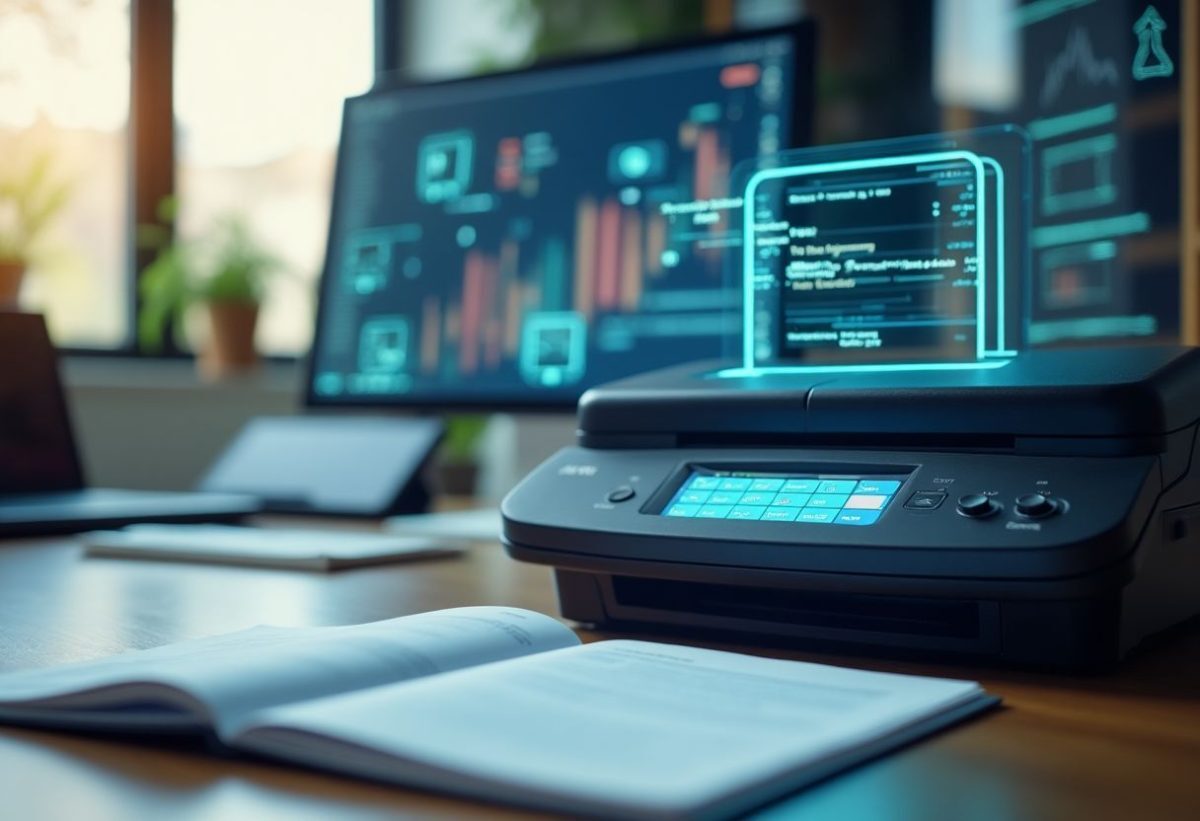
In a world where digital transformation has become essential, the dematerialization of documents presents itself as an effective solution to optimize document management. This approach not only reduces paper usage but also improves access to and security of information. What are the essential steps to successfully carry out this process and the benefits it can bring?
Document Dematerialization Process
Essential Steps for Dematerialization
The first step in dematerializing documents is to collect all necessary paper documents. Once this collection is completed, scanning is the next step. It transforms paper documents into electronic files, often in PDF format. It is crucial to use efficient software to ensure the quality of the scanning.
After scanning, implementing an electronic document management system (EDMS) is necessary. The EDMS allows for easy classification, storage, and retrieval of electronic documents. Solutions like deltic offer advanced features to support this process.
Benefits of Dematerialization for Businesses
Dematerialization offers numerous advantages for businesses. First, it allows for significant savings by reducing costs related to printing, physical storage, and document sending. Furthermore, data security is enhanced through electronic archiving, which protects against the loss or theft of paper documents.
By integrating an electronic management system, businesses benefit from better document management. This improves internal organization and facilitates access to documents for employees, thus promoting greater efficiency.
Electronic Signature and Dematerialization
Importance of Electronic Signature in Dematerialization
The electronic signature plays a crucial role in the dematerialization of documents. It provides legal validity to digitally signed documents, ensuring their integrity and authenticity. Electronic signature solutions not only secure transactions but also ensure their traceability.
In the context of a document dematerialization project, integrating the electronic signature is essential. It simplifies signing processes, accelerates validation times, and contributes to a reduction in document processing costs.
Electronic Document Archiving
Standards and Regulations for Electronic Archiving
Electronic document archiving must comply with certain standards to ensure their legal conformity. The NF Z42-013 standard is a reference for secure electronic archiving. Meanwhile, the European regulation eIDAS governs the preservation and validity of electronic documents within the European Union.
It is crucial to follow these guidelines to ensure that electronically archived documents are accessible and valid in the long term. Businesses must also define a document lifecycle management policy to determine their retention period and expiration, thus optimizing the management and security of information.