The animal kingdom is an inexhaustible source of curiosities and wonders. Some creatures possess anatomical characteristics so astonishing that they challenge our understanding of nature. For example, the chameleon has the ability to change color thanks to special pigment cells called chromatophores. This ability allows it to camouflage, communicate, and even regulate its body temperature.
Other animals, like the octopus, have brains distributed in each of their tentacles, providing them with impressive agility and coordination. These anatomical peculiarities offer a fascinating glimpse into the evolutionary strategies developed to survive and thrive in often hostile environments.
The anatomical peculiarities of animals
The animal world is full of specimens with fascinating anatomical peculiarities. Some of these characteristics even defy the laws of biology as we understand them.
The chameleon, master of camouflage
The chameleon is famous for its ability to change color thanks to pigment cells called chromatophores. These cells allow not only camouflage but also communication and thermal regulation. A feat that gives it a fundamental evolutionary advantage.
The octopus and its distributed brain
The octopus has a unique neurological structure: each tentacle has its own nerve center. This arrangement allows for exceptional agility and fine coordination, facilitating prey capture and predator evasion. A true marvel of evolution.
Baboons and their intriguing peculiarity
Baboons present an anatomical curiosity rarely discussed: the baboon’s behind. This specific characteristic intrigues scientists for various reasons. The coloration and texture of this area are linked to complex social and reproductive functions. These peculiarities play a role in social hierarchy and partner selection, offering a fascinating example of behavioral adaptation.
These examples show that anatomical diversity in the animal kingdom continues to surprise. Each species has developed unique solutions to survive and thrive, illustrating the richness and complexity of life on Earth.
Consider the importance of such discoveries for biology and evolution. They offer new and stimulating perspectives on the mechanisms that shape our natural world. 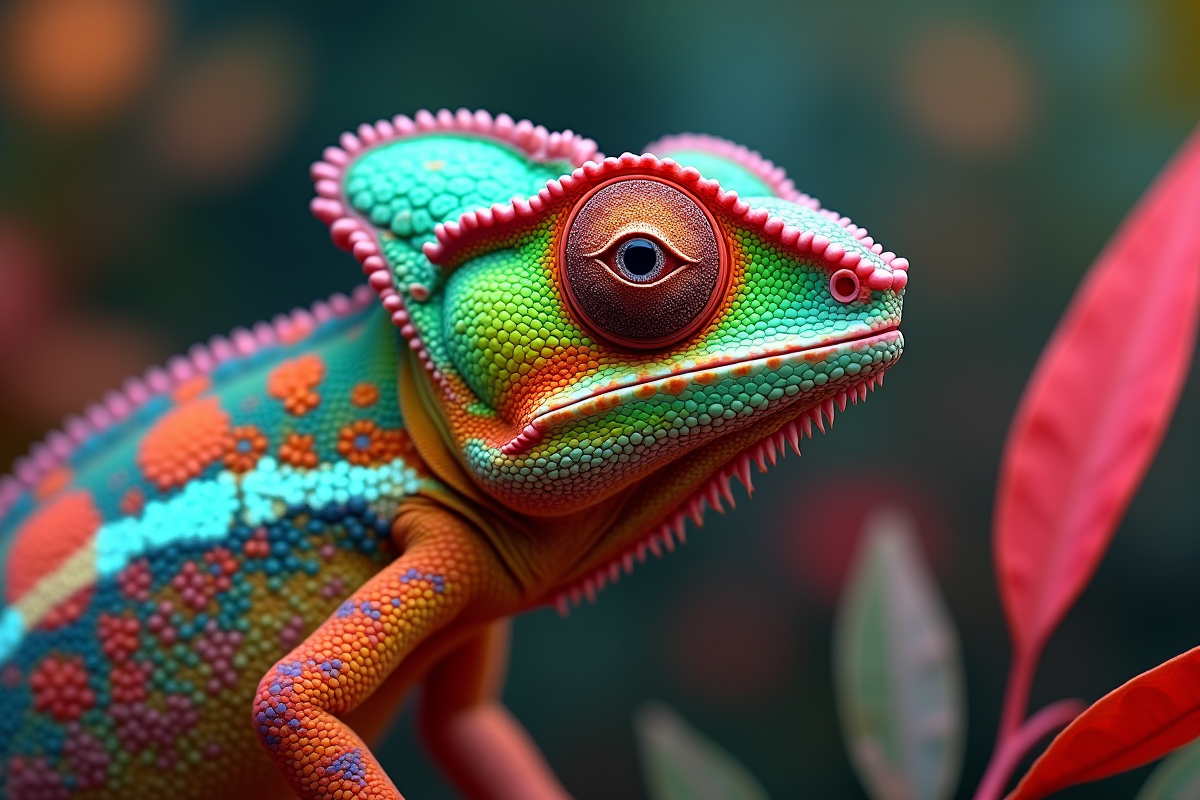
Anatomical structures as witnesses to species evolution
Deep-sea fish and their bioluminescence
Deep-sea fish have developed surprising anatomical structures to survive in the depths. One of the most remarkable is bioluminescence, produced by light-emitting organs called photophores. These organs not only attract prey but also facilitate communication and camouflage in the total darkness of their habitat.
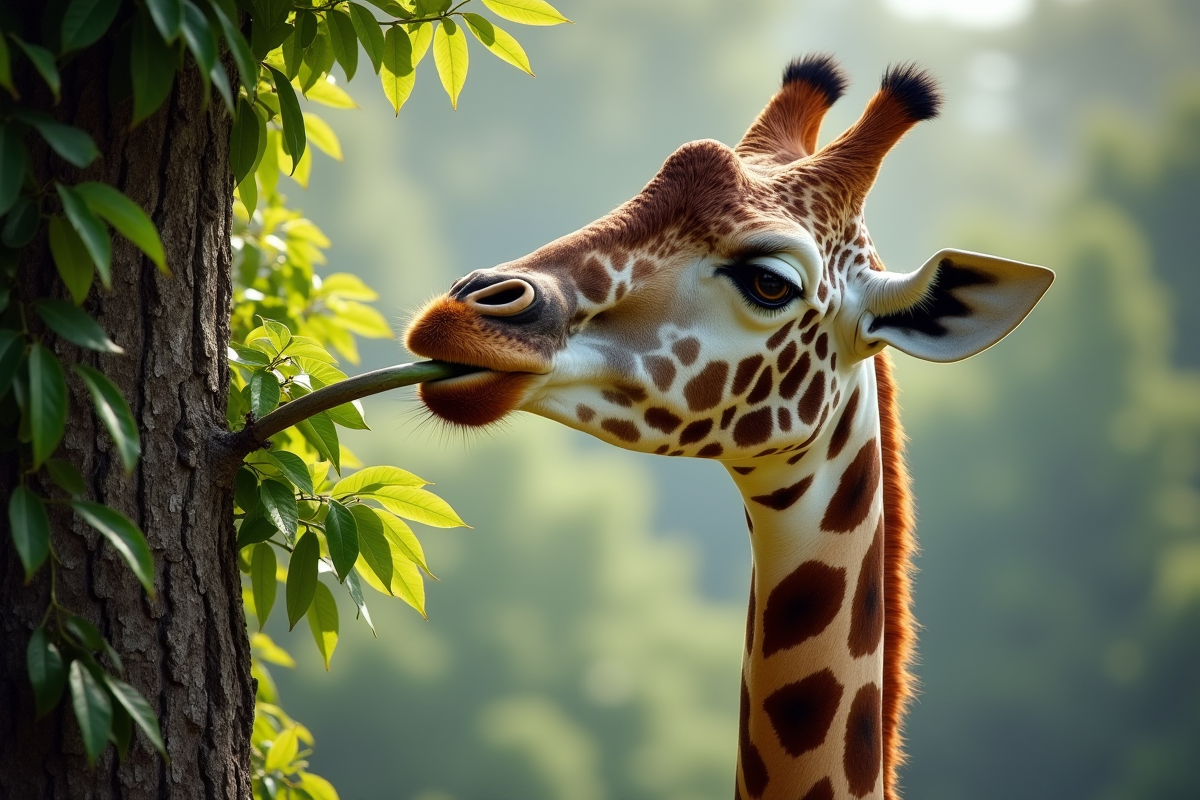
Giraffes and their unique circulatory system
The giraffe, with its disproportionately long neck, has had to adapt its circulatory system to pump blood to its brain. A network of specialized valves and high blood pressure allows this animal to maintain effective circulation, thus avoiding dizziness when bending down to drink.
Bats and their echolocation
Bats have developed a sophisticated echolocation system, using high-frequency sounds to navigate and hunt in the dark. This ability relies on complex anatomical structures in their ears and larynx, allowing for precise detection of obstacles and prey.
- Bioluminescence: Adaptation of deep-sea fish to attract, communicate, and camouflage.
- Giraffe circulatory system: Network of valves and high blood pressure for a long neck.
- Bats’ echolocation: Use of high-frequency sounds to navigate and hunt.
The diversification of anatomical solutions among animals is a testament to their remarkable adaptation to environmental challenges. These examples illustrate the ability of species to evolve to maximize their chances of survival in extreme and varied conditions.