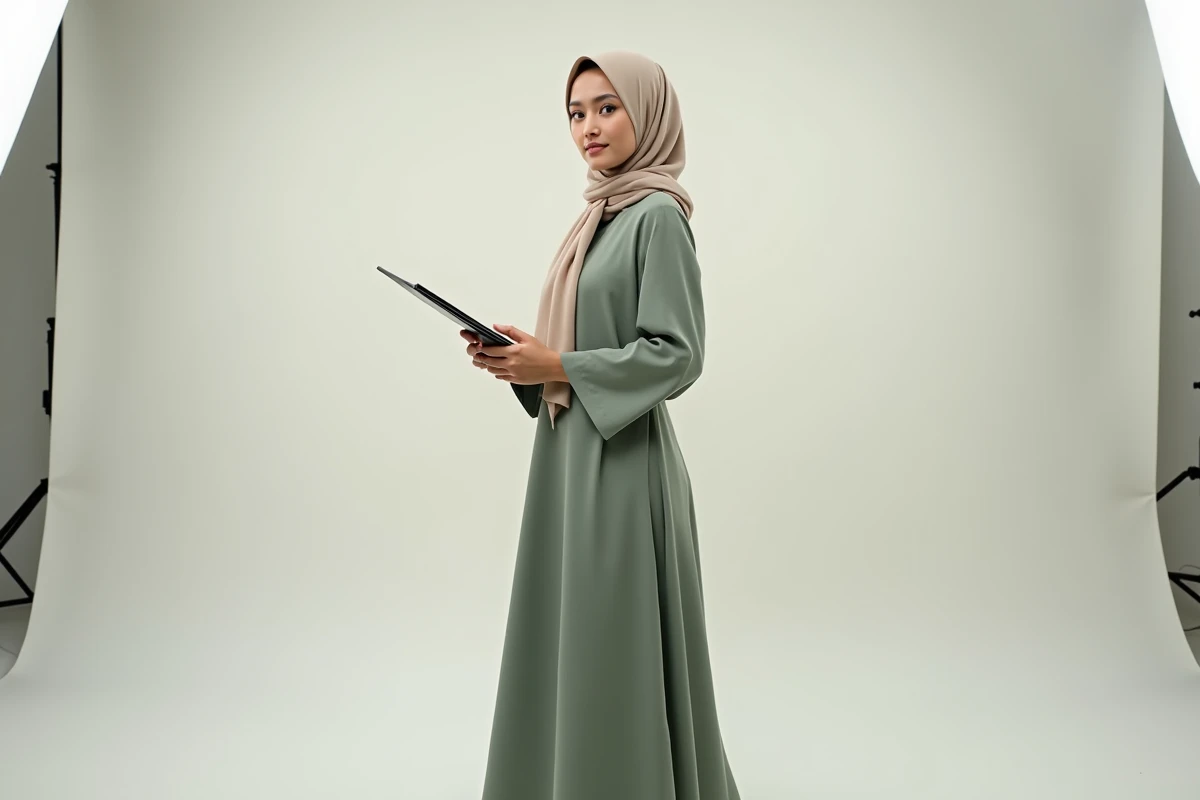
On a shooting set, a veiled model asks to see the brief before accepting the session. She checks the planned outfits, the presence or absence of diversity on the set, and the type of product being showcased. This situation, common in agencies specializing in modest fashion, summarizes the daily tension between religious practice and the professional reality of modeling.
Contractual Clauses and Work Framework for a Modest Model
The question of whether one can work as a modest model in Islam primarily hinges on the contract. Since 2022-2023, agencies specializing in modest fashion modeling have emerged in Anglo-Saxon countries. They offer contracts that explicitly guarantee hair coverage, the absence of tight or transparent outfits, and the ability to refuse any brief that contradicts the model’s religious requirements.
In practice, these clauses are negotiated before signing, not on the day of the shoot. A contract without a brief refusal clause exposes the model to unwanted compromises. The most frequent pressure, according to feedback published between 2021 and 2024, no longer concerns the removal of the hijab. It revolves around gradual compromises: accepting more fitted clothing, posing with a turban deemed insufficient by some religious opinions, or appearing without an abaya.
If the contract does not specify a clear scope on these points, the model finds herself in a position of having to negotiate brief by brief, which generates constant pressure.
Recent Fatwas on Modest Modeling: What is Distinguished
Several fiqh institutions in the West have published nuanced opinions on modest modeling since 2020. These fatwas do not give a blanket approval. They clearly distinguish what is forbidden from what remains conditional.
On the side of almost unanimous prohibition, we find the promotion of products considered haram:
- Alcohol, gambling, and any product whose consumption is prohibited by texts
- Lingerie or outfits aimed at explicit seduction, even worn by a veiled model
- Any campaign whose concept is based on the sexualization of the body, regardless of the degree of coverage
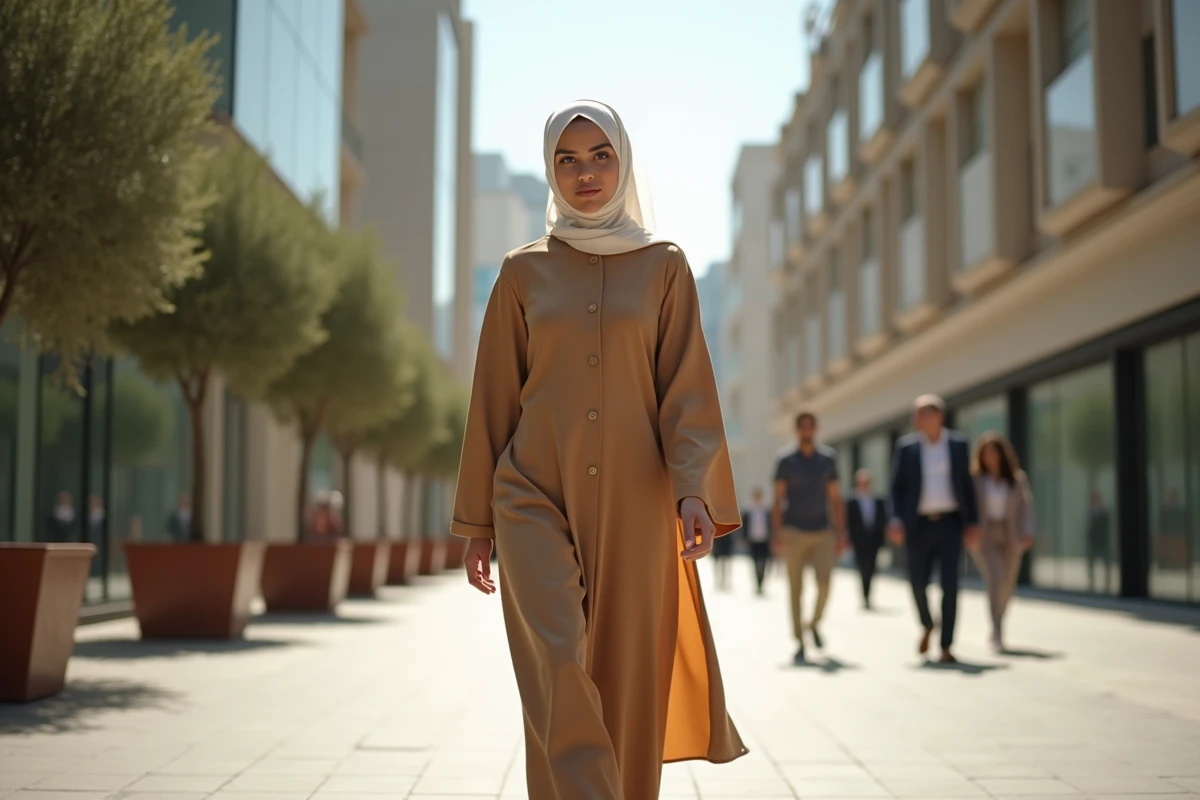
On the side of conditional possibility, posing for hijab or loose clothing brands remains feasible according to these opinions, under three conditions: avoiding sexualization, limiting unnecessary mixing on shoots, and not exposing the awra according to the legal school followed by the model.
These distinctions are rarely detailed in popular content on the subject. Feedback varies on this point depending on the consulted fiqh school, and a practicing model benefits from identifying the reference opinion she follows before signing a contract.
Concrete Pitfalls on the Ground and Gradual Compromises
Modest modeling in Islam is not just about wearing a hijab in front of the camera. The reality of the profession generates situations that theoretical opinions do not always anticipate.
The Slipping Brief
A first contract adheres to the modest specifications. The second proposes a differently tied turban. The third requests an open abaya over a fitted dress. Each isolated compromise seems minor, but their accumulation alters the initial positioning.
Active veiled models in the UK, Indonesia, and Turkey have described this mechanism in interviews published between 2021 and 2024. The pressure does not come from an artistic director asking to remove the veil. It comes from successive adjustments, presented as normal market evolutions.
The Gray Areas of the Set
Diversity on a shooting set raises practical questions that the contract does not always cover. Who adjusts the clothing between takes? Is the photographer accompanied by an assistant? One can demand a female team for clothing adjustments, but this must be articulated before the session, not during.
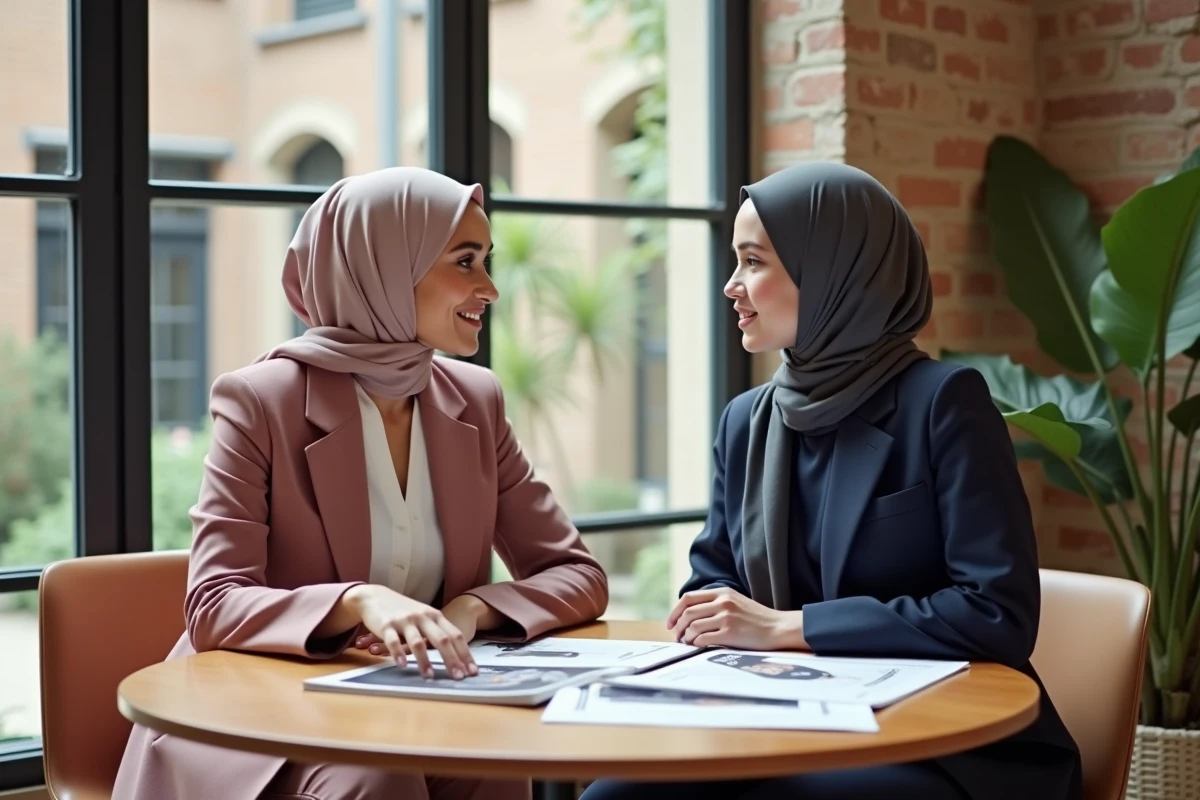
Building a Professional Positioning Consistent with One’s Practice
Working as a modest model requires a framework that the model defines herself, not one imposed by the agency. Here are the concrete elements to secure:
- Draft a personal charter listing the types of accepted and refused products, the minimum required outfits, and the conditions of the set (team, diversity, adjustments)
- Choose an agency specializing in modest fashion rather than a general agency that adds a “modest division” without real expertise
- Identify in advance the reference religious opinion followed, to justify a brief refusal on a clear and non-negotiable basis
- Include a withdrawal clause without penalty if the final brief differs from the previously approved brief
The contractual framework protects better than an informal discussion on the day of the shoot. The specialized agencies that have emerged in recent years offer contract templates that incorporate these guarantees, changing the game compared to traditional modeling where the model had to negotiate each point alone.
Modest modeling in Islam is neither automatically haram nor automatically halal. The answer depends on the type of product promoted, the concrete working conditions, and the actual respect for contractual commitments. It is the operational framework that determines compliance, not the title of model itself.