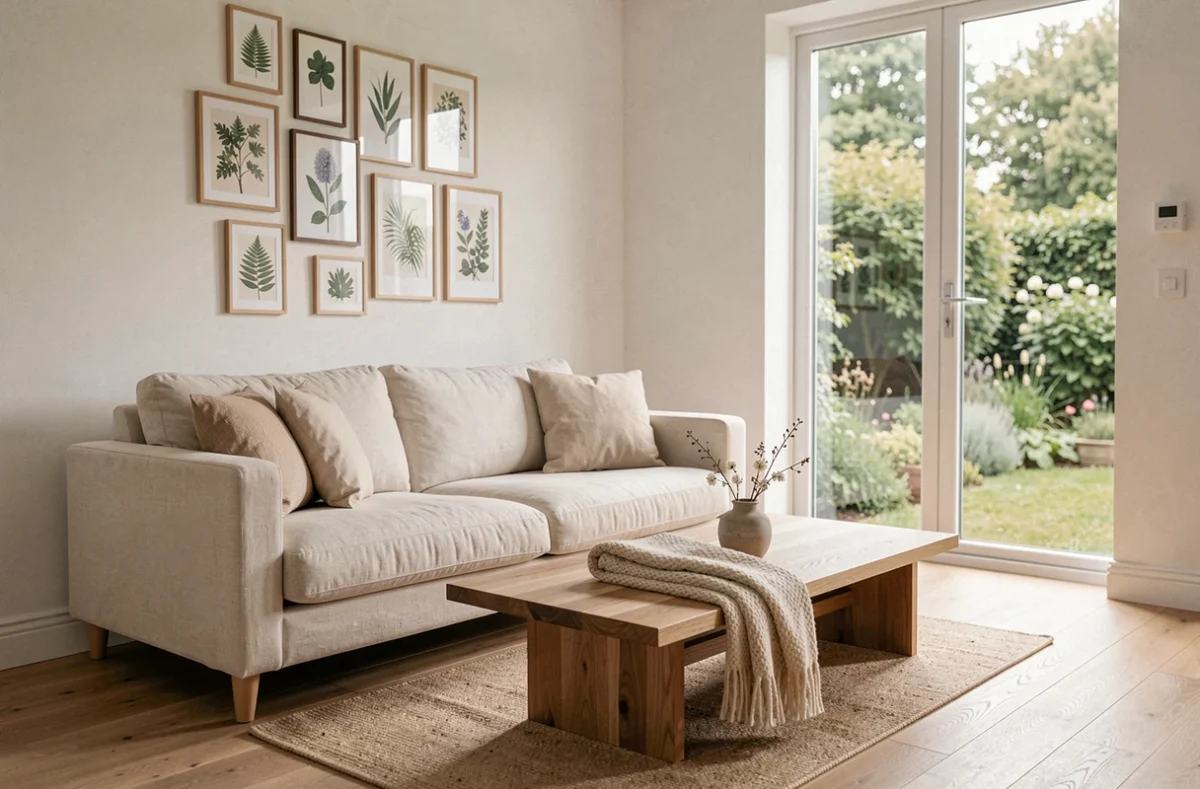
A poorly placed sofa can transform a bright living room into a dark corridor. A wall repainted in an overly saturated shade can tire the eyes in just a few weeks. Arranging and decorating your home is not just about choosing pretty objects: every decision alters the flow, light, and comfort of daily life. This article focuses on three concrete levers that truly change the use of an interior.
VAT and renovation work: what has changed in 2025-2026
Before discussing colors or furniture, a regulatory point deserves your attention. Since March 1, 2025, work that includes the supply or installation of a boiler using fossil fuels is excluded from the reduced VAT rate. If you are considering renovating a technical room (laundry room, bathroom, kitchen), the trade-off between heating and layout has changed significantly.
Another new development: the 2025 finance reform has eliminated the separate written certificate required to benefit from reduced VAT. Certification is now done directly on the quote or invoice. For anyone planning interior decoration work combined with energy renovation, this is a real administrative simplification, documented by the BOFiP (act 2026-00036).
Since July 18, 2026, certain reversible air-to-air heat pumps may benefit from a 5.5% VAT rate under specific technical conditions. If you want to learn more about layout possibilities that incorporate these changes, you can visit Athomedia’s home page to combine decor advice with practical aspects.

Decorating each room starting from natural light
Have you ever noticed that the same gray looks warm in a south-facing room and cold in a north-facing bedroom? Natural light is the first filter for any color. Choosing a shade without considering the orientation of the room is like playing the lottery.
Orientation and choice of wall colors
A north-facing room receives bluish light. Warm tones (terracotta, ochre, golden beige) compensate for this coolness. Conversely, a south-facing room can handle cooler shades (sage green, blue-gray) without appearing austere.
Always test a paint sample on the wall in question, at three different times of the day: morning, noon, and evening. Perception changes radically between the low morning light and the artificial evening lighting.
Multiplying light sources rather than watts
A single ceiling light in the center of a room creates shadowy areas on the sides. Three well-distributed light points (reading lamp, wall sconce, accent lamp on a piece of furniture) provide even illumination and allow for mood modulation.
- A reading lamp near the sofa for the living room, directed downward, avoids glare and creates a defined reading corner.
- Wall sconces in a narrow hallway visually widen the space by projecting light upward and downward.
- Under-cabinet lighting in the kitchen eliminates shadows on the countertop, making meal preparation more comfortable.
Lighting structures the space as much as furniture does. Before buying a fixture for its design, check where the beam falls and what it highlights.
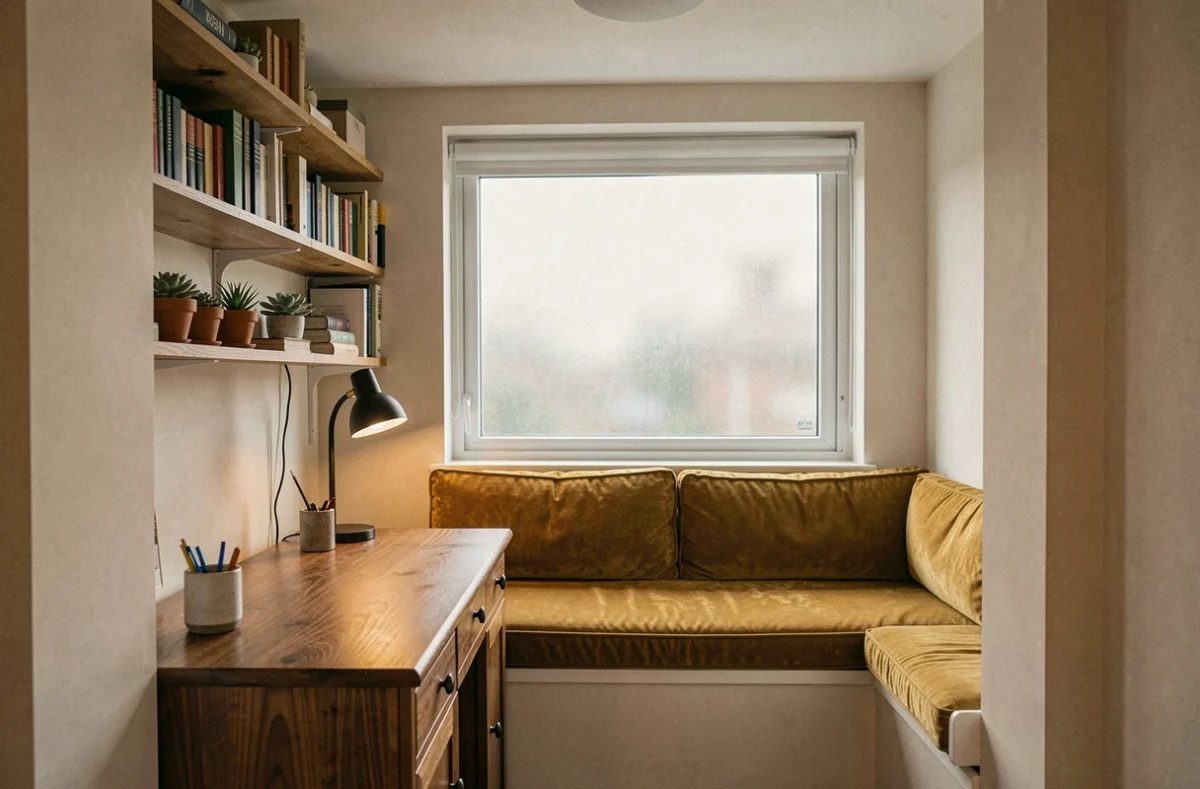
Arranging space with multifunctional furniture
In a home where space is limited, every piece of furniture that serves only one purpose wastes space. Multifunctional furniture is not just for studios: it solves concrete problems in all configurations.
Creating an office without sacrificing a room
A foldable tabletop fixed to the wall, in a corner of the living room or bedroom, provides a decent workspace. When folded, it frees up circulation. This type of layout is particularly suitable for homes where a dedicated office room does not exist.
Why choose this option instead of a traditional desk? Because a 120 cm wide piece of furniture against a wall takes up half the usable space in a children’s room. A foldable tabletop occupies less than 15 cm of depth when folded.
Integrated storage versus visible storage
Open shelves add character to a wall, but they require constant discipline: every object is on display. For high-traffic areas (entrance, bathroom), closed storage reduces visual clutter effortlessly.
- In the entrance, a storage bench combines seating, shoe storage, and a surface for placing keys and mail.
- In the bathroom, a narrow closed column stores towels and products without cluttering the sink area.
- In the living room, a TV unit with drawers hides cables, remote controls, and board games instead of leaving them lying around.
Closed storage in passage areas, open storage in calm living spaces: this simple distribution avoids the feeling of permanent disorder.
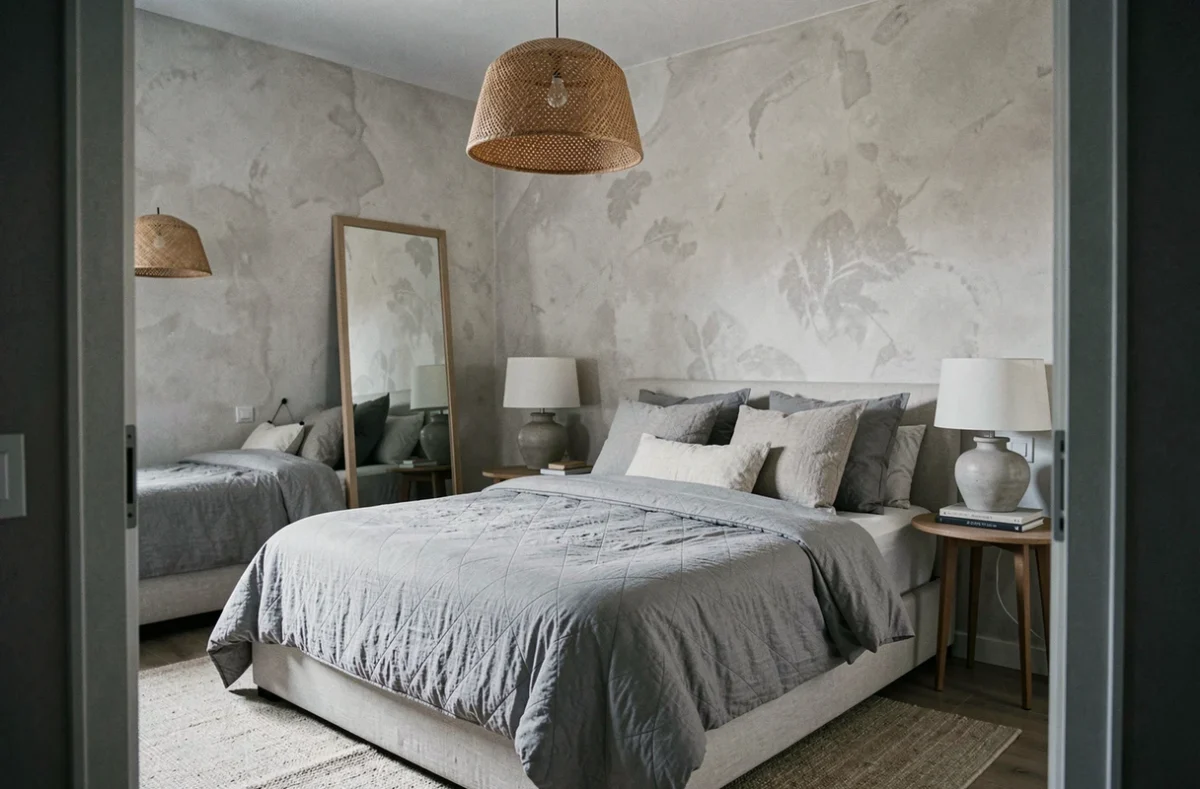
Colors and materials: composing a coherent style room by room
Decorating an entire house does not mean applying the same style everywhere. Each room has a different function. Coherence comes from a common thread, not from repetition.
A common thread can be a material (light wood appearing in each room in different forms), a limited palette (a maximum of three colors in varying intensities), or a type of finish (matte everywhere, or brushed brass for handles and fixtures).
In children’s rooms, bright colors work in small touches (cushions, frames, rugs) rather than as wall washes. An entire wall painted bright red may be appealing for six months, but then it becomes tiresome. Easy-to-replace decorative elements allow for style evolution without repainting.
For the bathroom, moisture-resistant materials (tiles, special paint for wet areas, treated wood) are non-negotiable. A nice classic wallpaper in a poorly ventilated bathroom will peel in a few months.
Arranging and decorating your home benefits from following a precise order: first light, then flow, then furniture, and finally decorative finishes. Reversing this order risks buying a beautiful armchair that blocks passage or painting a wall that will be drilled the following month to install a shelf.