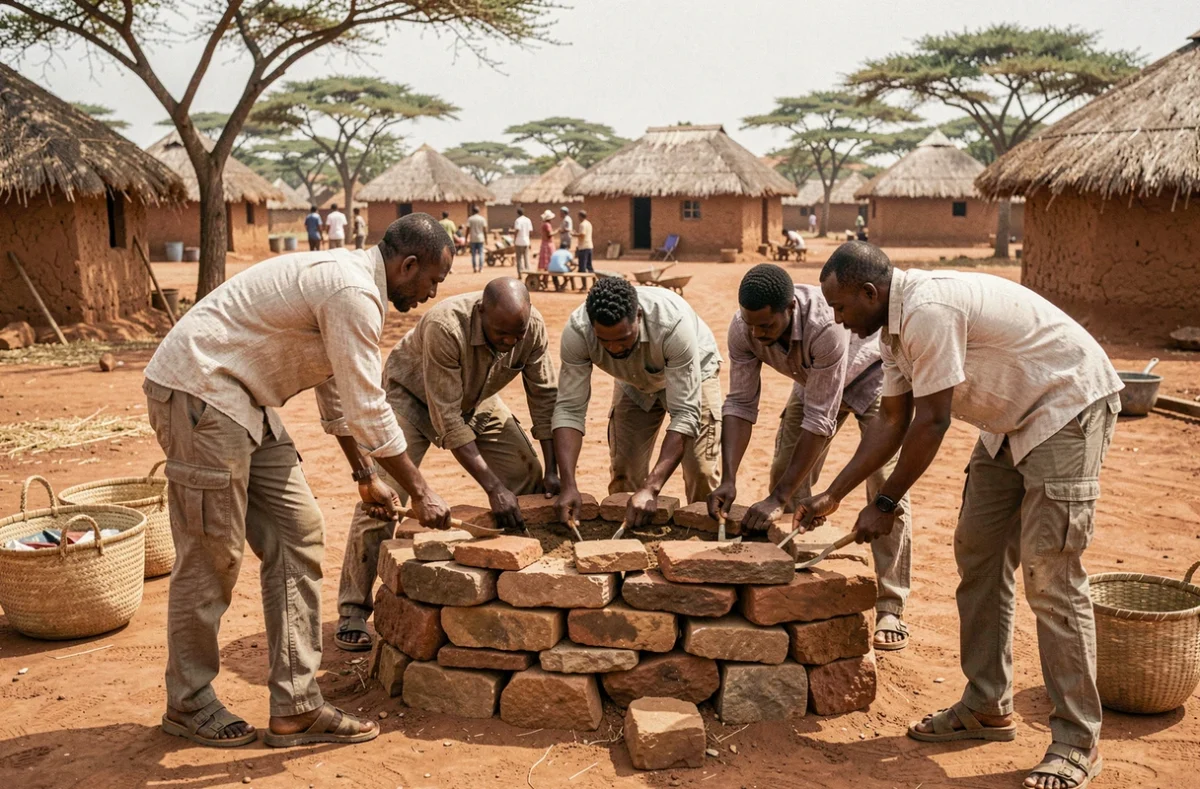
Solidarity tourism is based on a simple principle: that a significant portion of the revenue generated by travel remains in the hands of the communities that welcome visitors. This promise distinguishes the model from traditional tours, but it also raises questions about its actual implementation and limitations.
Distribution of tourism revenue: what traditional indicators do not measure
The usual data from the tourism sector (international arrivals, overnight stays, total spending) provides an incomplete picture. An article from the World Economic Forum, reported by The Economic Times in September 2026, highlights that the increase in international arrivals has not translated into better local revenues, particularly in destinations dependent on seasonal tourism.
Solidarity tourism attempts to address this gap by directly channeling part of the travel price towards local projects: school infrastructure, access to water, support for crafts. In practice, the proportion returned varies greatly from one operator to another. Travelers who wish to verify these commitments can consult the references published on tourisme-solidaire.org, which lists the actors in the sector and their labeling criteria.
The Statistical Framework for Measuring the Sustainability of Tourism, supported by the United Nations Statistical Commission in 2024, aims to complement traditional indicators with data on local social, environmental, and economic effects. The issue is no longer just counting tourists, but understanding where the money is spent and what portion of the value chain remains in the territory.
Solidarity and fair tourism: concrete differences with responsible tourism
The terms “solidarity,” “fair,” “responsible,” and “sustainable” are often used interchangeably. They refer to distinct approaches.
- Responsible tourism is a broad framework: it encompasses any practice aimed at reducing the ecological and social footprint of travel, without necessarily involving a direct financial transfer to communities.
- Fair tourism adds a contractual dimension: host communities participate in the design of the stay and receive a pre-negotiated payment, based on principles similar to fair trade.
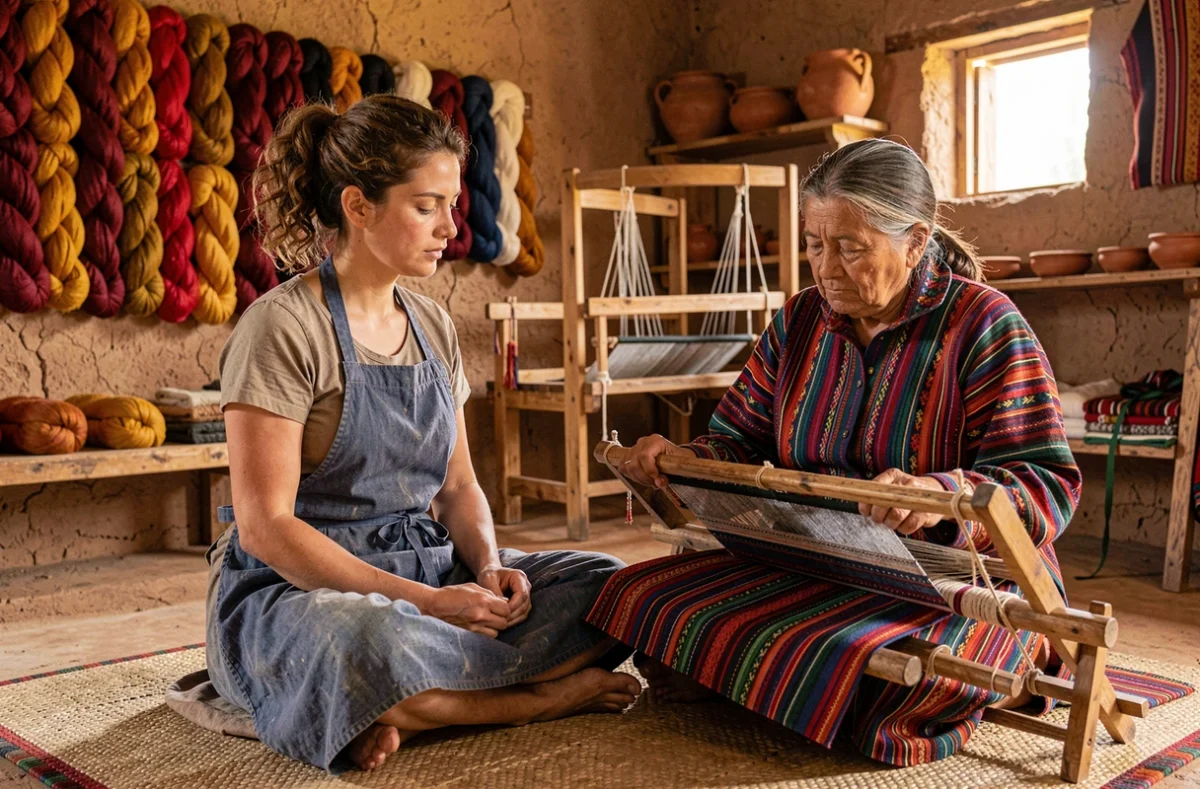
- Solidarity tourism goes further by integrating a funding component for local development projects. A fraction of the travel price is allocated to collective initiatives (health, education, environment) decided in collaboration with the locals.
This distinction has practical consequences for travelers. A stay labeled “responsible” may be limited to carbon offsetting for the flight. A solidarity stay involves a more direct financial and human commitment, with immersion time in villages and accommodation with locals.
Limitations of the solidarity model: dependence and showcase effect
Solidarity tourism is not without contradictions. The first concerns the economic dependence it can create in host communities. When the majority of a village’s income comes from tourism, a drop in visitors (health crisis, political instability, changing trends) weakens the entire local fabric.
The second limitation relates to the showcase effect. Some operators use solidarity language without real traceability of the funds returned. Field feedback varies on this point: some historical associations in the sector publish detailed reports, while other organizations remain opaque about the distribution of collected sums.
Verify an operator’s commitments
Before booking, three elements deserve attention: the portion of the travel price returned to communities (expressed as a percentage or fixed amount), the type of projects funded and their local governance, and finally the existence of an accessible annual report. A transparent operator publishes its accounts and names its local partners.
Evolution of demand: from escape to contribution
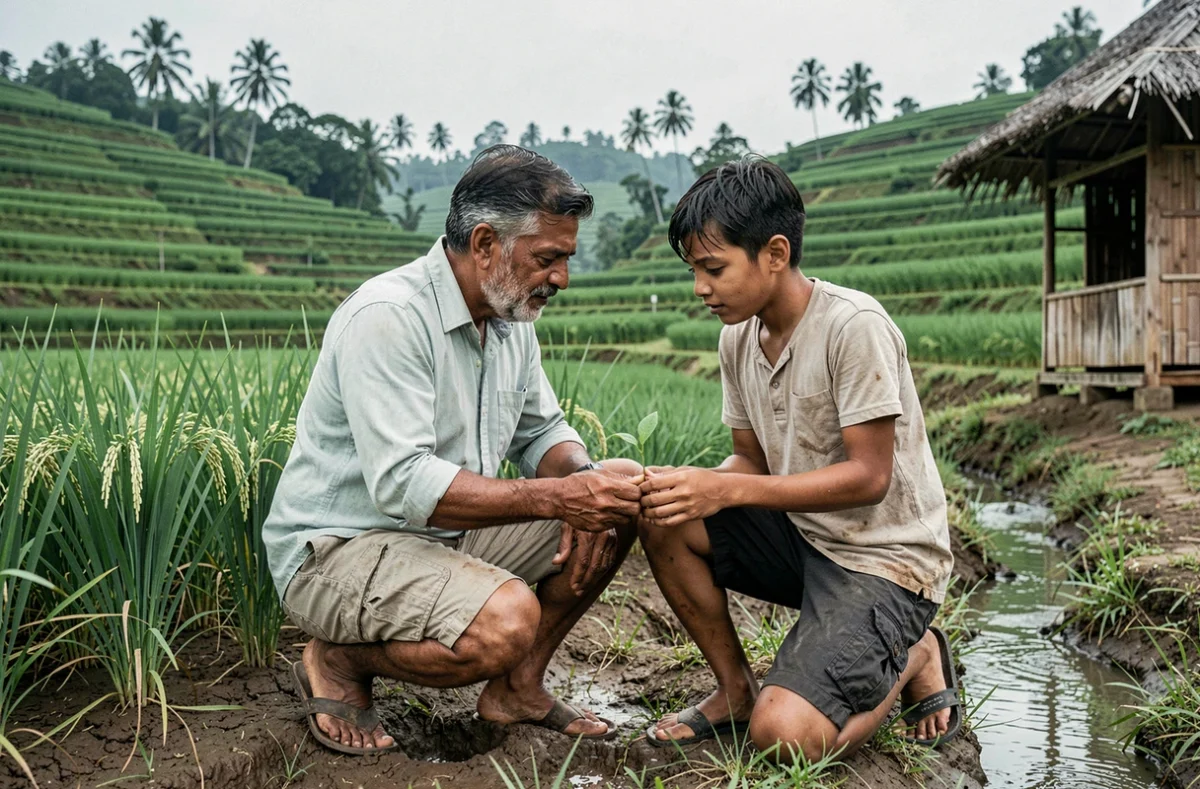
Research from Perplexity indicates that demand is shifting towards a logic of contribution rather than consumption. Travelers are no longer just seeking cultural immersion or spectacular landscapes. They want to know what their presence concretely brings to the territory they traverse.
This evolution is reflected in the multiplication of ethical tourism codes, documented by several specialized platforms. Destinations are beginning to set rules for welcoming visitors: maximum number of visitors per site, requirement to go through a local guide, prohibition of certain intrusive photographic practices. Solidarity tourism fits into this trend, but it precedes it by several decades, as French associations have been structuring this type of travel since the early 2000s.
Traveling differently without falling into voluntourism
Solidarity tourism is distinct from voluntourism, which involves going to “help” a community without specific skills. In a well-designed solidarity trip, the traveler does not intervene in local projects: they finance them through their presence and participate in daily life without replacing local actors. The solidarity traveler is a visitor who contributes, not an improvised volunteer.
The most sustainable outcomes of the model are not always the most visible. They often depend on the regularity of partnerships between operators and communities, the training of local guides, and the gradual diversification of revenue sources in the territory.
If the United Nations statistical framework becomes widespread, it could allow for a more rigorous measurement of these effects. The available data still do not allow for large-scale conclusions about the comparative effectiveness of different solidarity tourism models.