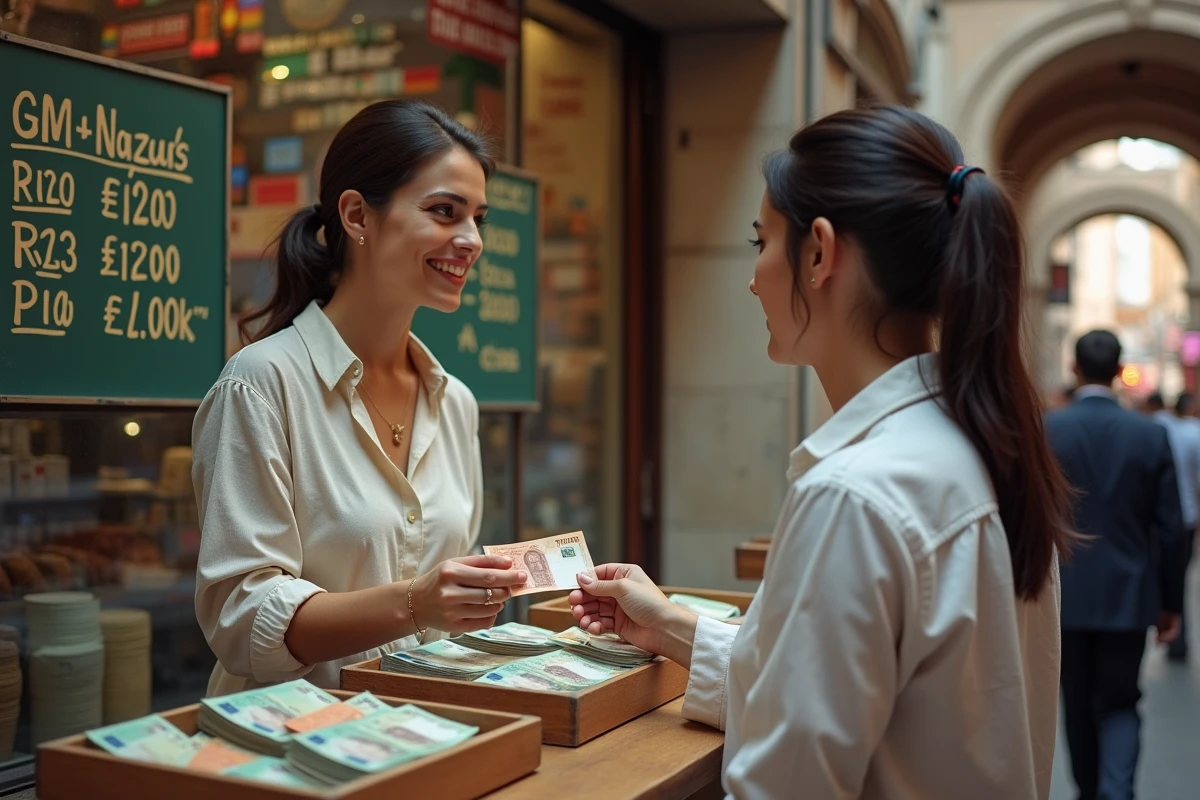
You land in Istanbul or Antalya with euros in your pocket, and the first practical question arises: where to convert them into Turkish lira without losing out on the exchange? The exchange rate of the Turkish lira fluctuates regularly, making the choice of where and when to convert more critical than one might think.
Here are the concrete options, their pitfalls, and a rarely discussed angle for travelers who cannot rush from one exchange office to another.
Exchange Rate Gap Between Airport and City Center in Turkey
The first instinct of many travelers is to exchange their euros upon arrival at the airport counter. Offices like Travelex, present in the terminals of Ankara (Esenboğa) and Antalya, apply a margin on the exchange rate that is significantly higher than that of offices located in the city.
Why this gap? These counters pay high rents and target rushed travelers. The displayed rate seems correct, but the hidden commission (integrated into the spread between the buying and selling rates) reduces the amount received. Exchanging just the minimum at the airport for the taxi or transfer, then converting the rest in the city, remains the most common strategy among regular travelers in Turkiye.
To prepare well for this step, you can consult a detailed guide on where to exchange euros for Turkish lira in Turkey before your departure.
Exchange Offices in Istanbul: Choosing the Right Neighborhood
In Istanbul, exchange offices (döviz bürosu) are concentrated in several areas. Tourist neighborhoods like Sultanahmet or the Grand Bazaar have dozens, but not all are equal.
Grand Bazaar offices often offer competitive rates, as competition is fierce there. The volume of transactions pushes operators to reduce their margins. However, check two elements before any transaction:
- The displayed rate should be close to the average market rate (which can be checked in real-time on sites like mataf.net or tauxde.com). A gap of more than a few percent signals excessive margins.
- Always ask if there is a commission in addition to the displayed rate. Some offices advertise an attractive rate, then add fixed fees.
- Prefer offices that clearly display their buying and selling rates on a sign visible from the street. The absence of signage is a warning signal.
Outside the Grand Bazaar, the neighborhoods of Beyoğlu and Kadıköy also have reliable offices, often less crowded and therefore quicker.
Withdrawing Turkish Lira from ATMs: Anticipating Bank Fees
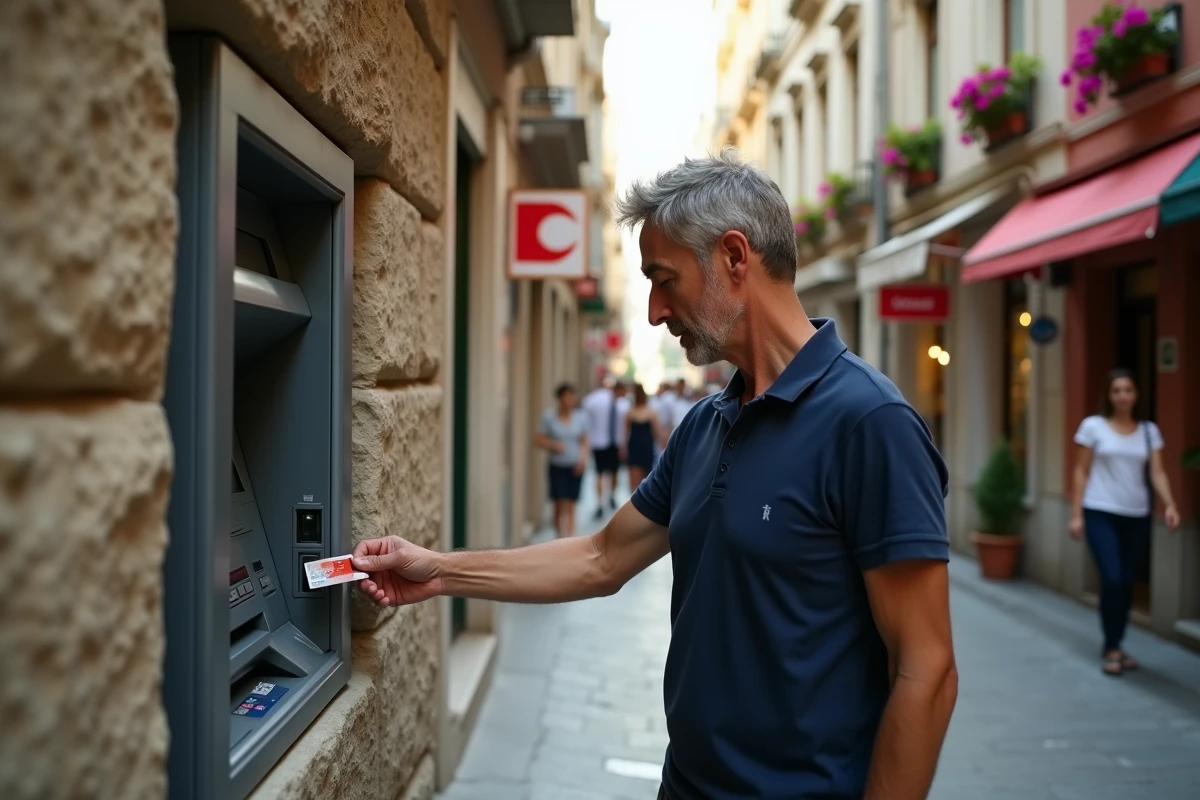
Withdrawing money from ATMs in Turkey seems simple, but fees can add up quickly. Two types of commissions overlap: that of your French bank and that of the Turkish bank that owns the ATM.
Turkish ATMs often offer dynamic currency conversion (DCC), meaning a debit directly in euros. Always refuse this option. The conversion at the Turkish bank’s rate is less favorable than that of your own bank or multi-currency card.
Do you have a standard Visa or Mastercard? Your French bank’s commission on withdrawals outside the euro zone can represent a fixed amount plus a percentage. Some travel-specific cards (offered by neo-banks or multi-currency accounts) eliminate or reduce these fees, making them relevant for a stay of several days in Turkiye.
What Amount to Withdraw Each Time?
Withdrawing larger amounts but less frequently limits the impact of fixed commissions. However, keep in mind that carrying a lot of cash carries a risk. A reasonable compromise: withdraw the equivalent of a few days of regular expenses (meals, transport, small purchases).
Currency Delivery and Exchange Without Travel: An Option for Travelers with Reduced Mobility
Do you have difficulty moving through the cobbled streets of Sultanahmet or the crowded aisles of the Grand Bazaar? This aspect of currency exchange is rarely addressed, even though it also concerns elderly travelers, families with strollers, or anyone with reduced mobility.
Several solutions exist to avoid physically going to an exchange office:
- Some hotels in Turkey offer a currency exchange service at the reception. The rate is rarely the best, but the convenience may justify the difference for small amounts.
- Multi-currency cards allow you to load Turkish lira before departure, via a mobile app, and then pay directly with merchants or withdraw from the nearest ATM to the hotel.
- Online exchange platforms allow you to reserve your currency in advance and pick it up at a chosen collection point, sometimes located in the lobby of a hotel or nearby.
Preparing your exchange before departure reduces dependence on physical offices once on-site. For a traveler with reduced mobility, this anticipation transforms a logistical constraint into a simple formality.
Paying in Euros or Turkish Lira: What Turkish Merchants Really Accept
In the tourist areas of Istanbul, Antalya, or Cappadocia, many merchants accept euros. Restaurants, hotels, and souvenir shops sometimes display their prices in both currencies.
The problem: the rate applied by the merchant is set by them, often rounded in their favor. On a purchase of a few euros, the difference seems minimal. On a carpet, an excursion, or a hotel night, it becomes significant.
Paying in Turkish lira with money exchanged at the right place remains more advantageous in the vast majority of cases. Bank cards are widely accepted in urban shops, but small merchants and local markets still primarily operate in cash.
The exchange rate of the Turkish lira against the euro changes frequently. Checking the rate on the day of your transaction, whether at the exchange office or ATM, prevents you from losing money on an outdated rate displayed the day before. A simple reflex that makes a difference throughout a stay in Turkey.